↓
 
  • Home
  • About Us
    • COVID-19
    • Privacy Policy
    • Staff
      • Our Vets
      • Our Vet Nurses
        • Veterinary Nursing Awareness Month (VNAM)
          • Veterinary Nurse awareness month 2015
          • Veterinary Nurse Awareness Month 2016
          • Veterinary Nursing Awareness Month 2017
          • Veterinary Nursing Awareness Month 2018
      • Our Receptionists
      • Visiting Specialists
      • Hollybank’s Resident Guinea Pigs
      • Staff Holiday
    • Hospital Status
      • RCVS Practice Standards Scheme
      • Floor Plan
      • Facilities
      • FAQ Hospital Status
    • History of Hollybank
    • Community
      • Hollybank’s involvement within the community
      • Work Experience Applications
      • Charity support
    • Newsletters
  • Your Pet
    • Dog Friendly Clinic
      • Pre-Visit Advice
    • Cat Friendly Clinic
      • Medicating your cat
      • Choosing a suitable cat carrier
      • Getting your cat used to their carrier
      • Reducing stress during trips to and from the vet
      • Recognising pain in cats
    • Brave Pets!
    • What Happens when…
      • Your pet is vaccinated
      • Your pet is microchipped
      • Your pet is castrated
      • Your pet is spayed
      • Your female dog is spayed
      • Your pet has an operation
      • Your pet is hospitalised
      • You move house
    • Educational Articles
  • Fees & Insurance
    • Prescriptions
    • Out of Hours Emergency Service
    • Second Opinions & Referrals
    • Terms & Conditions
  • Register
    • Update your details
    • Register Online
  • Appointment/Prescription Request
    • Appointment Request
    • Repeat Prescription Request
  • Contact/Find Us
    • Find Us
    • Contact Us
    • Feedback
      • Client Satisfaction Survey

Independent Small Animal Hospital

Home - Page 97 << 1 2 … 95 96 97 98 99 … 138 139 >>

Post navigation

← Older posts
Newer posts →

Is your pet drinking and urinating excessively?

Posted on 5th October, 2015 by Richard Hewitt12th January, 2016

Drinking excessively

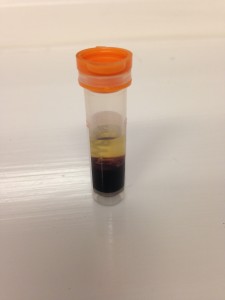
When an animal drinks more we refer to this as Polydipsia. Your dog should drink approximately 90mls/kg/day and your cat should drink approximately 45mls/kg/day. If you are concerned your animal may be drinking more than usual then measuring their daily intake can be a useful first step.

For example a 20kg Labrador could drink up to 1.8litres per day and a 4kg cat could drink up to 180mls per day. Cats are notorious for drinking out of anything other than their water bowls so this may be more difficult to monitor!

Normal and expected reasons for increased water intake are heat and increased loss of fluids (vomiting and diarrhoea).

Unexpected increases in water can be due to a number of medical conditions and the next step would be a clinical exam.

Urinating excessively

When an animal urinates more we refer to this as Polyuria. Normal urine output for dogs is approximately 45mls/kg/day and for cats 40mls/kg/day. However, it is not feasible for you to measure this output at home!

An indication of polyuria is that your animal will ask to go outside more or may urinate inappropriately in your house. Often drinking more (polydipsia) and urinating more (polyuria) will come hand in hand and your animal may present with both of these signs together.

However, there are lots of other reasons why your pet’s urination may have changed. If your animal is urinating more it is useful for you to note down the following:

  • Where your pet is urinating more (outside, in their bed, at the back door).
  • The volume of urine passed each time (small amounts or large volumes).
  • Urine appearance (Colour, smell, blood).
  •  Whether your pet is straining to urinate.


If you are concerned that your pet is drinking or urinating excessively the please phone 01606 880890 to book an appointment.

Posted in Educational articles, News

NEW Extended Opening Hours…

Posted on 21st September, 2015 by Richard Hewitt21st September, 2015

Here at Hollybank Veterinary Centre we appreciate that lives can be busy and sometimes there are just not enough hours in the day!

To provide a wider range of appointment times and to help find a time that suits you we have extended our opening hours.

New opening hours are as follows:

  • Monday: 8.30am-7.30pm
  • Tuesday: 8.30am-7.30pm
  • Wednesday: 8.30am-7.30pm
  • Thursday: 8.30am-7.30pm
  • Friday: 8.30am-7.30pm
  • Saturday: 8.30am -1pm
  • Sunday: 8.30am- 1pm

We continue to provide our dedicated 24/7 out of hours service outside of these times

Please call us on 01606 880890 to book an appointment.

Posted in News

Hollybank’s Brave Pet of the Month…Bear!

Posted on 15th September, 2015 by Richard Hewitt18th September, 2015

Bear is a lovely male Chesapeake Bay retriever who recently presented to Hollybank Veterinary centre with a sudden onset cough.

When an animal presents with a cough it is important to know how quickly the cough developed, the severity and frequency of the cough and what the cough sounds like.

Other specific clinical signs that we may ask about include: sneezing, nasal discharge, breathing rhythm and effort and willingness and ability to exercise as normal.

There are lots of reasons for a coughing dog. This can include, kennel cough, infectious pneumonia, aspiration pneumonia/aspirated foreign material, heart disease, lungworm, bronchitis, cancer, fluid, air or infected fluid within the chest cavity.

In our physical exam we want to pay particular attention to the respiratory tract. Your animal’s windpipe will be palpated to assess whether they are sore or reactive in this region i.e can we stimulate a cough. The lungs will be listened to for abnormal lung sounds which can include; crackles, rattles, whistles and wheezes. Your animal’s respiration rate, rhythm and effort will also be noted. Heart disease can actually present with a cough so ruling in or out a heart murmur is helpful too. Regardless of the complaint a full physical exam will be performed too.

On Bear’s physical examination there was some mild irritation along his windpipe but he was otherwise very well. We elected to monitor bear in the first instance. Often cases of mild tracheal irritation or kennel cough will resolve without intervention given time.

However, due to the quick development of his cough and the reaction around his windpipe we could not rule out trauma and inhalation of a foreign body. If Bear’s cough failed to resolve we would need to re-examine him with the proposal for further investigations.

Within 4 days Bear’s cough had still not improved.  To investigate further we would need to take chest x-rays to image Bears lungs and the space around them.  A small camera would also need to be placed down his large airways, a procedure called bronchoscopy.

On bronchoscopy, a large sprig of hedgerow was found lodged in Bear’s bronchus. The foreign material was removed under camera guidance and specialised forceps.

As you can see the size was quiet considerable!

Bear was sent home to recover on a short course of oral antibiotics. Bear was still expected to cough within the first few days due to a combination of disruption of the airway lining (which activates cough receptors) and residual inflammation and infection.


Bear is currently doing very well at home and hasn’t had any further fights with any hedgerows!


Posted in Brave Pets, News

Post navigation

← Older posts
Newer posts →

Contact Us

Hollybank Veterinary Hospital
584 Chester Road Sandiway
Northwich
CW8 2DX

01606 880890


Hollybank Vets Winnington
39 Walker Road Winnington
Northwich
CW8 4UD

01606 717969

info@hollybankvets.co.uk

Opening Hours

Consultation by appointment only

Sandiway

Monday - Friday

8:00am - 8:00pm

Saturday & Sunday

8:00am - 5:00pm

Winnington

Monday - Friday

8:00am - 7:30pm

small_animal_hospital Print CFC-Gold-logo-for-clinics-2020-Smaller
We are an RCVS Small Animal Hospital, an ISFM Gold Cat Friendly Practice and a RWAF Rabbit Friendly Practice!
Introducing our 'Cat Only Clinics' at Winnington! Introducing our 'Cat Only Clinics' at Winnington! We understand visiting the vets can be stressful so head over to our website to learn why cat only consulting hours are helpful and what times we have available 🐾🐈🩺😼. www.hollybankvets.co.uk
That’s a wrap on Veterinary Nursing Awareness Mont That’s a wrap on Veterinary Nursing Awareness Month (VNAM) 2023!

We have come to the end of VNAM for this year, we hope you have found it interesting hearing from our nurses about what their jobs involve and how they feel empowered, from starting out as students, to having years of experience. Even though VNAM is over our nurses are still working hard behind the scenes with the rest of the Hollybank team to ensure your pets receive the best care possible, we are very proud of each of our nurses and what they bring to the team.

Keep an eye on our Instagram and Facebook for further updates and helpful pet care information.

#VNAM2023 #WhatVNsDo #EmpowerOurVNs #hollybankvets #sandiway #winnington
Meet Holly! (with Diddy the cutie) 😻 Holly joined Meet Holly! (with Diddy the cutie) 😻
Holly joined the Hollybank nursing team in February this year after graduating in 2022 and starting her RVN career at a feline only practice. She has a passion for feline nursing and her favourite roles as a nurse include inpatient care and nurse clinics. 😻🐾🐶 
Head to our website to read more about Holly ➡️ (link in bio) 
#VNAM2023 #WhatVNsDo #EmpowerOurVNs #hollybankvets #sandiway #winnington
Meet Katie and her gorgeous gang! 👋 She joined the Meet Katie and her gorgeous gang! 👋 She joined the Hollybank nursing team in August last year as a new grad RVN 🎓🩺 We are very proud of how our new grad nurses have developed their skills since joining the team, especially after a difficult education period throughout lockdown. Head to our website to find out more about Katie's journey to becoming an RVN and why she loves being a veterinary nurse! 😻🐶🐾 (Link in bio) 
#VNAM2023 #WhatVNsDo #EmpowerOurVNs #hollybankvets #sandiway #winnington
Meet Lucy! (and cuddly Caven) 🐶 Over the next week Meet Lucy! (and cuddly Caven) 🐶
Over the next week we'll be introducing you to some of the newer faces that have joined our nursing team! 
Lucy has been nursing for 10 years and joined Hollybank in April this year. Her passion is medical nursing and nutrition and she loves caring for inpatients. Lucy is looking forward to meeting you all and your lovely pets! 🐶🐾😺 
Head to our website (link in bio) to read more about Lucy! 
#VNAM2023 #WhatVNsDo #EmpowerOurVNs #hollybankvets #sandiway #winnington
Next up we're hearing from Becky, she carried out Next up we're hearing from Becky, she carried out her sandwich year placement with us as a student nurse and has returned as a qualified RVN! 🩺 🎓 Head to our website to read all about what she's enjoying and the challenges she's faced as a new grad vet nurse! (Link in bio) 😺🐾🐶
@thebvnaltd #VNAM2023 #WhatVNsDo #EmpowerOurVNs #hollybankvets #sandiway #winnington
This week we are hearing from our Head Nurse Cat! This week we are hearing from our Head Nurse Cat! 😺 Head to our website to see what she has to say about how teaching and mentoring members of our team (particularly our SVNs) is certainly an empowering part of a nurses role. 
www.hollybankvets.co.uk (link in bio)
@thebvnaltd #VNAM2023 #WhatVNsDo #EmpowerOurVNs #hollybankvets #sandiway #winnington
We are starting VNAM this month by meeting our won We are starting VNAM this month by meeting our wonderful student veterinary nurses. In photo order, Kiera, Jess and Katie 🩺🩺 Please visit our website to learn about their journeys to becoming fully fledged registered veterinary nurses.🐾🐾 www.hollybankvets.co.uk
Each May we celebrate Veterinary Nursing Awareness Each May we celebrate Veterinary Nursing Awareness Month (VNAM), which was started by the British Veterinary Nursing Association (BVNA). The purpose of VNAM is to spread the word to the veterinary profession and pet owners about the importance of the role of the veterinary nurse, and the provision of responsible pet care to the general public. This year the theme is ‘empowerment’ to raise awareness of empowerment within the veterinary nursing profession, and the myriad of jobs nurses have within the veterinary team and wider veterinary profession. 

Here at Hollybank we have 9 Registered Veterinary Nurses (RVNs) and 5 Student Veterinary Nurses (SVNs) who work across both our Sandiway and Winnington practices. Nurses are very much involved in the team effort to provide the best possible care for your pets. A lot of the nurse's roles are behind the scenes, so stay tuned this month to hear from all our nurses about what their jobs involve, what they enjoy about it and how they feel empowered.

#VNAM2023 #WhatVNsDo #EmpowerOurVNs
#hollybankvets #sandiway #winnington
All rabbits can be at risk of flystrike, however r All rabbits can be at risk of flystrike, however rabbits with obesity, open wounds or dirty bottoms (usually due to poor diets) are at very high risk of flystrike. 
A rabbit’s diet should consist of 5% pellets, 85% hay, and 10% greens. Therefore, prevention is better than cure. 
Check your rabbits bottom at least once every day, and if there is any urine or faeces, clean and dry 
the area. Keep the rabbit’s environment clean and dry so that flies aren’t attracted. It is important to 
clean your rabbits’ enclosures regularly especially in summer months to prevent the build up of 
urine which can attract flies. If your rabbit is producing unusually wet faeces, it is important to keep their bottoms clean and contact a vet for treatment, to prevent flystrike. 
** If you find your rabbit has maggots, this is an emergency, and you must get your rabbit seen by a vet immediately. Your rabbit may be in severe pain and shock and will require veterinary treatment.**
Prevention is the best strategy. 
A healthy bun has a healthy bum!
Preventing flystrike this summer.... Flystrike is Preventing flystrike this summer....
Flystrike is a painful condition caused by flies. Some species of fly (such as blue bottles and green
bottles) lay their eggs on rabbit fur, which then hatch into maggots. Maggots then rapidly mature, 
burrow under the skin and eat into the living flesh. 
Flystrike can develop very quickly, and can be fatal if it isn’t treated. 
As we roll into summer, flystrike becomes more likely to occur, as the fly population increases over summer. It is important to note however that flystrike can still occur at any time of the year, and indoor rabbits can still be affected.
Schedule 3 is an amendment of the Veterinary Surge Schedule 3 is an amendment of the Veterinary Surgeons Act of 2002. This amendment is important as it allows RVNs and SVNs to do more in practice following delegation from a veterinary surgeon. RVNs can can perform medical treatment or minor surgery (not entering a body cavity), SVNs can do this too but only under the direction of a vet and are supervised by a vet or RVN #VNAM2022 #whatvnsdo #bvna #vetnurselife
The more modern history of veterinary nursing. Reg The more modern history of veterinary nursing. Registered Veterinary Nurses are still striving to have the title of RVN protected.
1984 – RANA changed to VN as the legal protection statute expired and Veterinary Nurses were titled.
1991 – The Veterinary Surgeons Act Schedule 3 allows VNs to complete more tasks and the RCVS established the VN list. This set the standard for VN formal training. 
2002- The first BSc Hons veterinary nursing students graduate
2007 – The RCVS starts a register of veterinary nurses, marking a large step forward in regulation.
2010 – The RCVS council appoints its first Veterinary Nurse.
2012 – The new code of professional conduct includes a professional declaration for veterinary nurses.
May 2022 – Now, 61 years after first becoming professionally recognised, nurses play a key role in veterinary practice, from monitoring your pets under anaesthesia, to caring for them in hospital to running important laboratory tests and so much more. The profession has grown a lot through time and is sure to progress even more in the future.
#VNAM2022 #whatvnsdo #BVNA
May is Veterinary Nursing Awareness Month! Hannah May is Veterinary Nursing Awareness Month! Hannah one of our Student Veterinary Nurses has been researching the history of veterinary nursing.
1925 – Louis Sewell writes of ‘specifically trained canine nurses’ in a distemper hospital in Montpelier Place, Knightsbridge. 
1934 – F.W. Cousens (King George V’s veterinary surgeon) described “the first attempt at training women nurses for dogs in this or any other country” Cousens tried to get the title of ‘canine nurse’ recognised once a person had completed an examination and given a certificate of efficiency, “the council would not entertain the idea… the council will come round to my views, probably sooner than later”.
1947 – Phyllis Peake MRCVS writes in ‘Hobday’s Surgical Diseases of the dog and cat’ that good animal nurses need “a strong vocational call… self-sacrifice, tenderness and the ability to consider the patient as an individual… the certificate of registration could be a sign of competence”.
1961 – The RANA (Registered Animal Nursing Auxiliary) scheme was approved, making veterinary nursing an officially recognised profession. RANA was used as the titles ‘nurse’ and ‘veterinary’ were protected in law.
#VNAM2022 #whatvnsdo #BVNA
Did you know...our pets can suffer from high blood Did you know...our pets can suffer from high blood pressure too? Hypertension can occur for a number of reasons and will need to be monitored closely to prevent organ damage occuring as a result of untreated high blood pressure. This is easily done with blood pressure readers very similar to those doctors and nurses may use on us, to help us get the best readings we usually tend to have our patients in for a few hours to chill out. Here's Quinn being a very good boy for his readings.
Baby David was in for his annual health check and Baby David was in for his annual health check and booster vaccinations today! Michelle the vet checked him over and gave him a full bill of health and he was a true champ 🐶
Bruce is looking forward to the weekend! Swipe for Bruce is looking forward to the weekend! Swipe for jumping joy! ➡️➡️➡️
Each month we have a visiting CT scanner at our Wi Each month we have a visiting CT scanner at our Winnington practice. Merlin relaxed after his sedation medication, had his scan and had cuddles with Becky one of our student veterinary nurses on recovery.
Our patients have lots of monitoring forms to docu Our patients have lots of monitoring forms to document all the medications and nursing care they need
Nipper has been in to be castrated today and he's Nipper has been in to be castrated today and he's been having regular anaesthetic recovery checks with our nurses, they have been monitoring his pain levels, temperature, pulse and breathing rates. He's enjoyed having some cuddles too!
Follow on Instagram

Follow us

Hollybankvets on facebook Facebook

About Us

Hollybank Veterinary Centre is an approved member of the Royal College of Veterinary Surgeons Practice Standards Scheme.

As an accredited practice, we have passed an inspection carried out by an experienced veterinary surgeon focusing on a range of areas, including hygiene, health and safety, clinical governance and the facilities we provide.

Out of hours care

All out of hours emergencies will be directed to a dedicated night vet team at MiNightVet near Chester. This will mean that any overnight emergencies will be seen and treated by a team of vets and nurses who have chosen to dedicate themselves to emergency care and will be available all night.

Our exceptional inpatient care will remain the same. We will continue to be staffed 24/7 by our fabulous Registered Veterinary Nurses, supported by our vets, to provide complete care for any pet hospitalised overnight. Any patients treated at MiNightVet will be transferred back to Hollybank first thing in the morning or as soon as they are fit to travel.

Out of hours care

All out of hours emergencies will be directed to a dedicated night vet team at MiNightVet near Chester. This will mean that any overnight emergencies will be seen and treated by a team of vets and nurses who have chosen to dedicate themselves to emergency care and will be available all night.

Our exceptional inpatient care will remain the same. We will continue to be staffed 24/7 by our fabulous Registered Veterinary Nurses, supported by our vets, to provide complete care for any pet hospitalised overnight. Any patients treated at MiNightVet will be transferred back to Hollybank first thing in the morning or as soon as they are fit to travel.
copyright: Hollybank Veterinary Centre Ltd 2021 - Weaver Xtreme Theme Privacy Policy
↑
Content Protected Using Blog Protector By: PcDrome.